
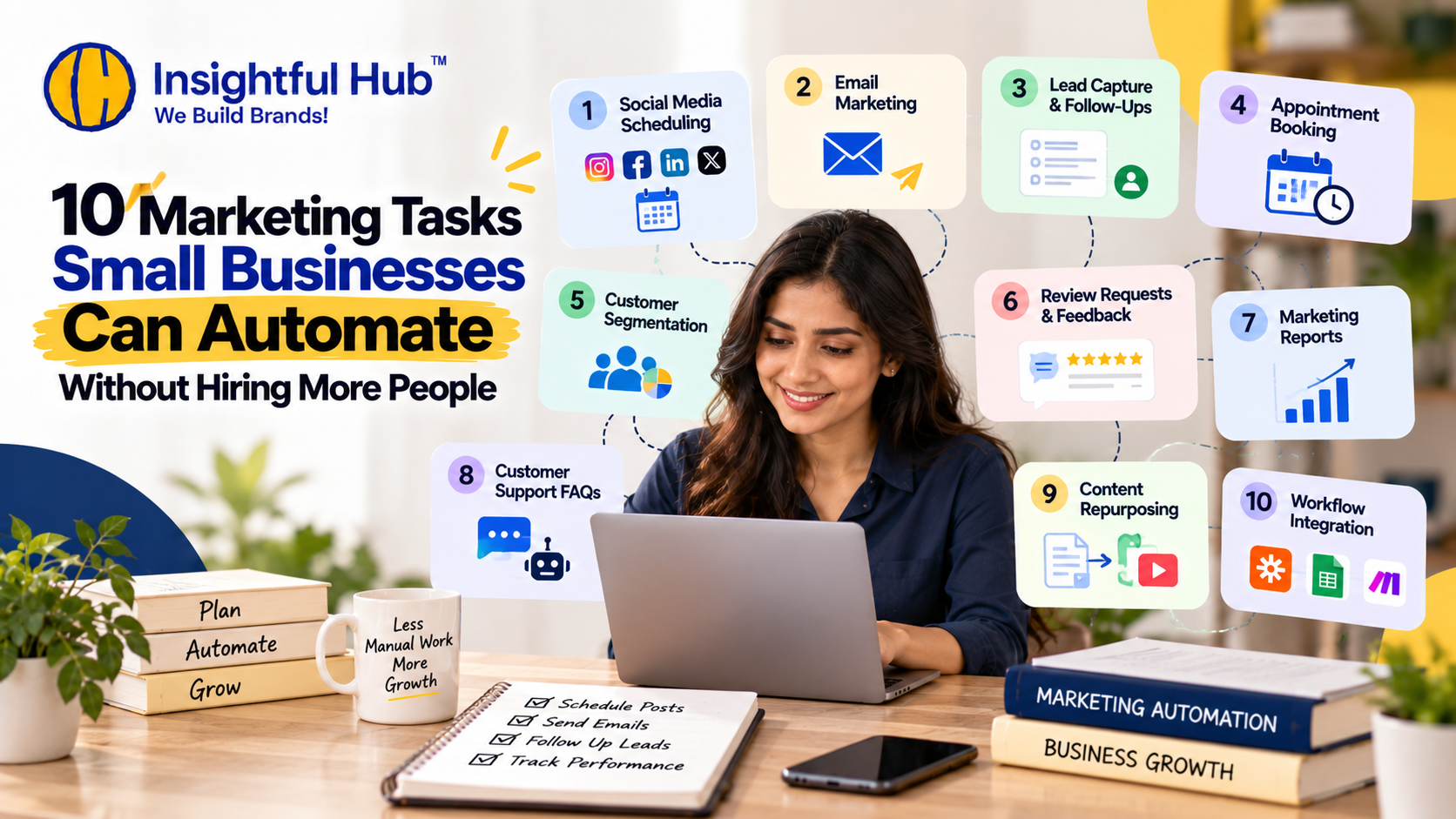
10 Marketing Tasks Small Businesses Can Automate Without Hiring More People
Running a small business often means managing marketing, sales, customer enquiries, social media, and daily operations with a limited team. Repeating the same tasks every day can consume valuable time that could be spent growing the business.
This is where marketing automation can help. By using the right tools and workflows, small businesses can automate repetitive activities, improve consistency, and manage more work without immediately hiring additional employees.
Here are 10 marketing tasks your business can automate to save time and improve efficiency.
1. Social Media Scheduling
Save time on daily posting
Publishing content consistently across multiple social media platforms can be time-consuming.
How to automate it
Use scheduling tools to plan and publish posts in advance. Create a weekly or monthly content calendar and schedule posts for your preferred publishing times.
Tools to explore: Buffer, Meta Business Suite.
2. Email Marketing Campaigns
Send the right message automatically
Email marketing can help businesses nurture potential customers and maintain relationships with existing ones.
How to automate it
Set up welcome emails, product updates, promotional campaigns, and educational email sequences that trigger based on subscriber actions.
Tools to explore: Brevo and Mailchimp.
3. Lead Capture and Follow-Ups
Respond to enquiries faster
When potential customers submit a website form, delayed responses can cause them to lose interest.
How to automate it
Connect your website forms to a CRM or email platform. Automatically send an acknowledgement, notify your team, and create a follow-up task for each new enquiry.
Tools to explore: HubSpot and Zoho CRM.
4. Appointment Booking and Reminders
Reduce manual scheduling
Arranging meetings through repeated messages can waste time and create scheduling conflicts.
How to automate it
Let customers book available time slots through an online booking page. Automatically send confirmations, calendar invitations, and reminders before appointments.
Tool to explore: Calendly.
5. Customer Segmentation
Send more relevant campaigns
Sending the same message to every customer may reduce engagement and lead to irrelevant communication.
How to automate it
Group customers according to their interests, purchase history, enquiry type, or engagement. Use these segments to deliver more relevant emails and offers.
Example
A service business can separate new enquiries from existing clients, while an ecommerce business can distinguish first-time buyers from repeat customers.
6. Review Requests and Feedback Collection
Make reputation management easier
Collecting customer feedback manually can be difficult to maintain consistently.
How to automate it
After a completed purchase or service, trigger a polite email or message asking customers to share honest feedback. Track responses and route negative feedback to your support team for follow-up.
Important: Follow the review platform’s policies and avoid offering incentives for positive reviews.
7. Marketing Performance Reports
Reduce time spent preparing reports
Manually collecting campaign data from advertising platforms, website analytics, and spreadsheets can be repetitive.
How to automate it
Connect your marketing data to reporting dashboards that summarize website traffic, leads, conversion rates, and campaign performance.
Tools to explore: Google Analytics and Looker Studio.
8. Customer Support FAQs
Answer common questions faster
Small teams often spend significant time answering repeated questions about pricing, services, delivery, or bookings.
How to automate it
Create an FAQ page, automated email responses, or a chatbot that answers common questions and directs customers to the right resources. Provide an option to contact a real person when necessary.
Automation should make support easier, not prevent customers from receiving personal assistance when they need it.
9. Content Repurposing
Get more value from every piece of content
Creating fresh content for every platform requires time and planning.
How to automate it
Turn a blog article into social media posts, email summaries, short-video scripts, and LinkedIn updates using AI writing tools. Review and adapt every output before publishing.
For example, one detailed blog post could provide the starting point for several social media posts and one email newsletter.
10. Marketing Workflow Integration
Connect your tools and eliminate repetitive work
Marketing activities often involve moving information between website forms, spreadsheets, email platforms, and CRMs.
How to automate it
Use workflow automation tools to connect applications and trigger actions automatically.
For example, when a customer submits a website form, the workflow can add the lead to Google Sheets, notify your team, and send a confirmation email.
Tools to explore: Make and Zapier. Check each platform’s current plan limits before choosing a solution.
How to Get Started With Marketing Automation
Start with tasks that consume the most time
Follow these steps
List repetitive marketing tasks your team performs every week.
Identify tasks with clear rules and predictable outcomes.
Automate one or two high-impact workflows first.
Test the process and check for errors.
Measure time saved, response speed, and business results.
Expand automation only when the initial workflows work reliably.
You do not need expensive software or a complicated setup to get started. A simple automated email or lead notification can provide immediate value.
How Insightful Hub Can Help
At Insightful Hub, we help businesses connect their websites, content, and digital marketing activities to support more efficient growth.
From improving website experiences to building measurable marketing campaigns, the right digital strategy can help small businesses spend less time on repetitive work and more time serving customers.
Explore our performance marketing services or web design and development services. You can also contact Insightful Hub to discuss your business goals.
Final Thoughts
Marketing automation is not about replacing human interaction. It is about reducing repetitive work so your team can focus on strategy, customer relationships, and business growth.
Start with simple tasks such as social media scheduling, lead notifications, email follow-ups, and reporting. As your business grows, connect more tools and workflows where automation provides measurable value.
You don’t always need a bigger team to manage more work. Sometimes, you need a smarter process.