
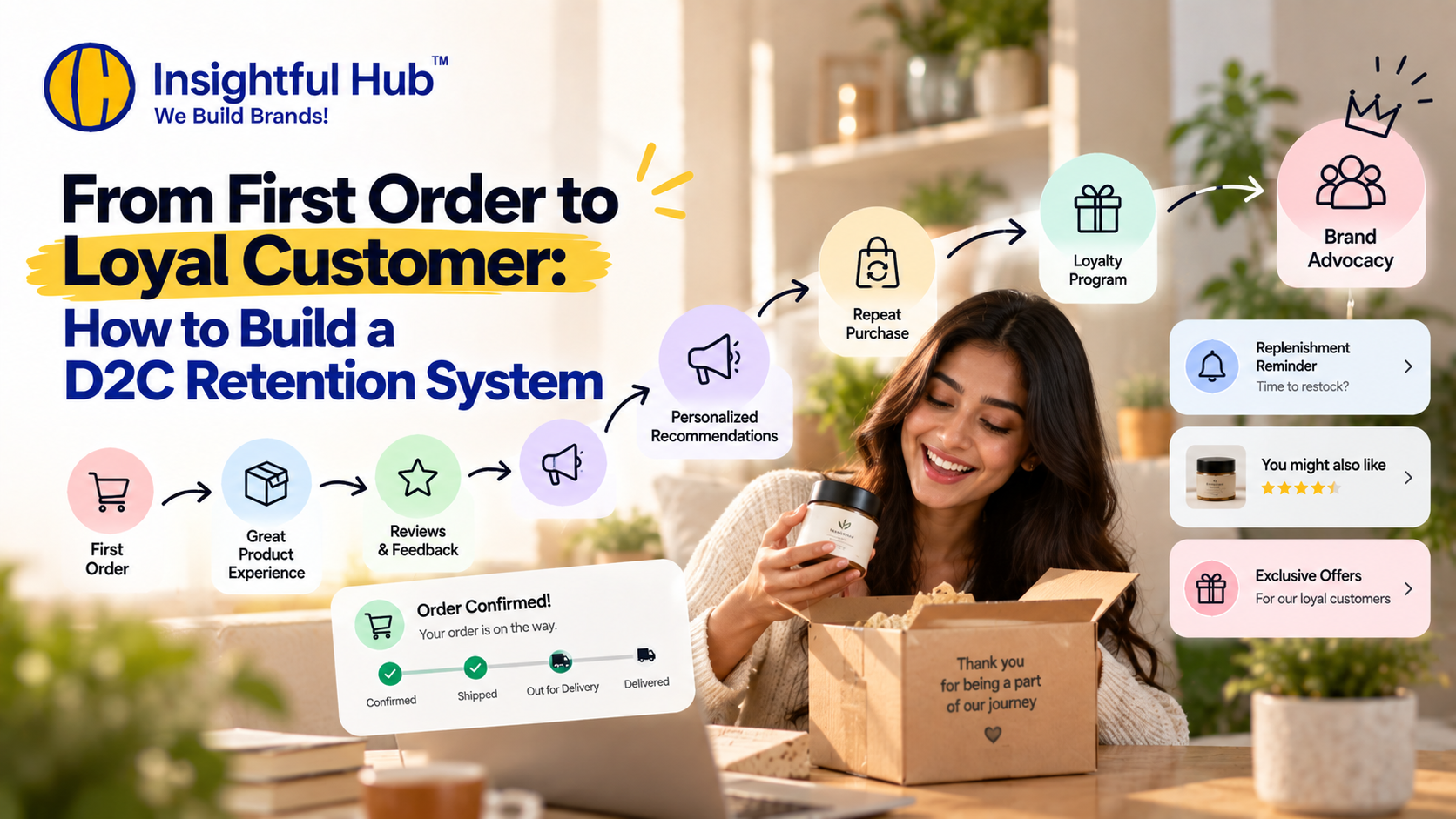
From First Order to Loyal Customer: How to Build a D2C Retention System
Getting a customer to place their first order is an important milestone for any D2C brand. But the customer journey shouldn’t end after the payment is completed.
The real opportunity begins after the first purchase.
A strong D2C retention system helps brands stay connected with customers, encourage repeat purchases, increase customer lifetime value, and build long-term relationships.
Instead of constantly spending more to acquire new customers, brands can create systems that encourage existing customers to buy again, engage with the brand, and eventually become loyal advocates.
Here’s how to build a D2C retention system from the first order to long-term customer loyalty.
What Is a D2C Retention System?
A D2C retention system is a structured process for keeping customers engaged after their first purchase and encouraging them to return.
A typical journey looks like:
First Order → Product Experience → Follow-Up → Repeat Purchase → Loyalty → Advocacy
Each stage needs a different type of communication and customer experience.
1. Start With a Great First Purchase Experience
Retention begins immediately after the customer places an order.
A poor delivery or confusing post-purchase experience can reduce the chances of a second purchase.
Make sure customers receive:
- Order confirmation
- Shipping updates
- Delivery information
- Easy customer support
- Clear product instructions
- Return or exchange information
The goal is to make customers feel confident that they made the right decision.
Keyword Focus:
- D2C customer retention
- ecommerce customer retention
- D2C retention strategy
- customer retention marketing
2. Don’t Stop Communicating After the Sale
One common mistake is communicating heavily before the purchase and becoming silent afterward.
Your post-purchase communication can include:
- Order updates
- Product education
- Usage tips
- FAQs
- Helpful content
- Product recommendations
- Feedback requests
The communication should provide value rather than constantly asking customers to buy something.
3. Help Customers Get the Most From Their Product
A satisfied customer is more likely to consider purchasing again.
Help customers understand how to use your product effectively.
Depending on your product, this could include:
- How-to videos
- Product guides
- Care instructions
- Usage recommendations
- Tutorials
- Tips and best practices
For example, a skincare brand can provide a simple routine guide, while a food brand can share recipes and serving ideas.
4. Ask for Reviews and Feedback
Your existing customers can provide valuable insights.
After the customer has had enough time to experience the product, ask for:
- Product reviews
- Ratings
- Photos
- Videos
- Testimonials
- Feedback
Customer-generated content can also become useful marketing material for your website and social media, with appropriate customer permission.
More importantly, feedback helps you understand what customers like and where your product or experience can improve.
Keyword Focus:
- customer feedback strategy
- ecommerce reviews
- D2C customer experience
- customer loyalty strategy
5. Recommend Products Based on Customer Behavior
Once someone has purchased from you, you have an opportunity to make future shopping more relevant.
For example:
Customer buys shampoo → Recommend conditioner
Customer buys running shoes → Recommend running accessories
Customer buys coffee → Recommend another blend
Instead of sending the same promotion to everyone, use purchase history and customer preferences to create more relevant recommendations.
6. Create a Replenishment Strategy
Some products naturally need to be purchased again.
These could include:
- Skincare
- Food products
- Supplements
- Coffee
- Household products
- Personal care products
If customers regularly use a product, remind them when they may need to reorder.
A simple message such as:
“Running low? Your next refill may be due.”
can be more useful than a generic promotional message.
7. Use Email and WhatsApp Strategically
Email and WhatsApp can become important parts of a D2C retention system when used appropriately and with the required customer permissions.
You can use them for:
- Product education
- Recommendations
- Offers
- New launches
- Loyalty updates
- Order updates
- Customer support
- Product reminders
- Personalized communication
- Relevant offers
The key is frequency and relevance.
Customers should feel that your communication is useful rather than intrusive.

8. Build a Loyalty Program
A loyalty program can give customers additional reasons to continue purchasing.
Depending on your business, you could offer:
- Points
- Exclusive offers
- Early access
- Birthday rewards
- Member-only products
- Referral benefits
- Special bundles
The program should be simple enough for customers to understand.
If customers don’t understand how they earn or use rewards, the program may not create much value.
9. Turn Loyal Customers Into Brand Advocates
Your best customers can become more than repeat buyers.
They can become brand advocates.
Encourage satisfied customers to:
- Leave reviews
- Share their experiences
- Create UGC
- Refer friends
- Participate in community campaigns
- Share products on social media
This creates a cycle:
Customer → Repeat Customer → Advocate → New Customer
That can connect retention with customer acquisition.
10. Measure Customer Retention
You can’t improve retention if you don’t measure it.
Important metrics include:
- Repeat purchase rate
- Customer retention rate
- Customer lifetime value
- Average order value
- Purchase frequency
- Churn rate
- Revenue from returning customers
- Email/WhatsApp engagement
For example, if many customers purchase once but very few return, investigate the post-purchase experience.
If customers return but spend very little, product recommendations or bundles may be worth testing.
A Simple D2C Retention System
A practical retention journey can look like this:
First Order
↓
Order Confirmation
↓
Delivery & Product Education
↓
Review / Feedback
↓
Personalized Recommendation
↓
Replenishment Reminder
↓
Repeat Purchase
↓
Loyalty Program
↓
Referral / UGC
↓
Brand Advocate
This turns retention into a continuous customer journey instead of a collection of individual marketing campaigns.
How D2C Brands Can Improve Customer Retention
Personalize Communication
Don’t send every customer the same message. Use relevant customer and purchase information where appropriate.
Focus on Customer Experience
Retention starts with the product and service experience, not just marketing automation.
Give Customers a Reason to Return
Use new products, replenishment reminders, loyalty benefits, bundles, and relevant recommendations.
Don’t Over-Discount
Constant discounts can reduce perceived value and train customers to wait for offers.
Instead, focus on creating genuine reasons for customers to return.
The Future of D2C Customer Retention
D2C retention is increasingly moving toward personalized customer experiences.
Brands are using:
- AI-assisted recommendations
- Customer segmentation
- Marketing automation
- First-party customer data
- Personalized offers
- WhatsApp communication
- Loyalty programs
- Creator and UGC campaigns
The focus is shifting from simply asking customers to “buy again” toward understanding what customers need at different stages of their relationship with the brand.
Final Thoughts
The first purchase is not the end of the customer journey.
It’s the beginning.
A strong D2C retention strategy helps brands move customers through:
First Order → Great Experience → Engagement → Repeat Purchase → Loyalty → Advocacy
Instead of constantly focusing on acquiring new customers, build systems that give existing customers a reason to come back.
Because sustainable D2C growth isn’t only about getting more customers.
It’s also about creating more value from the customers you’ve already earned.