
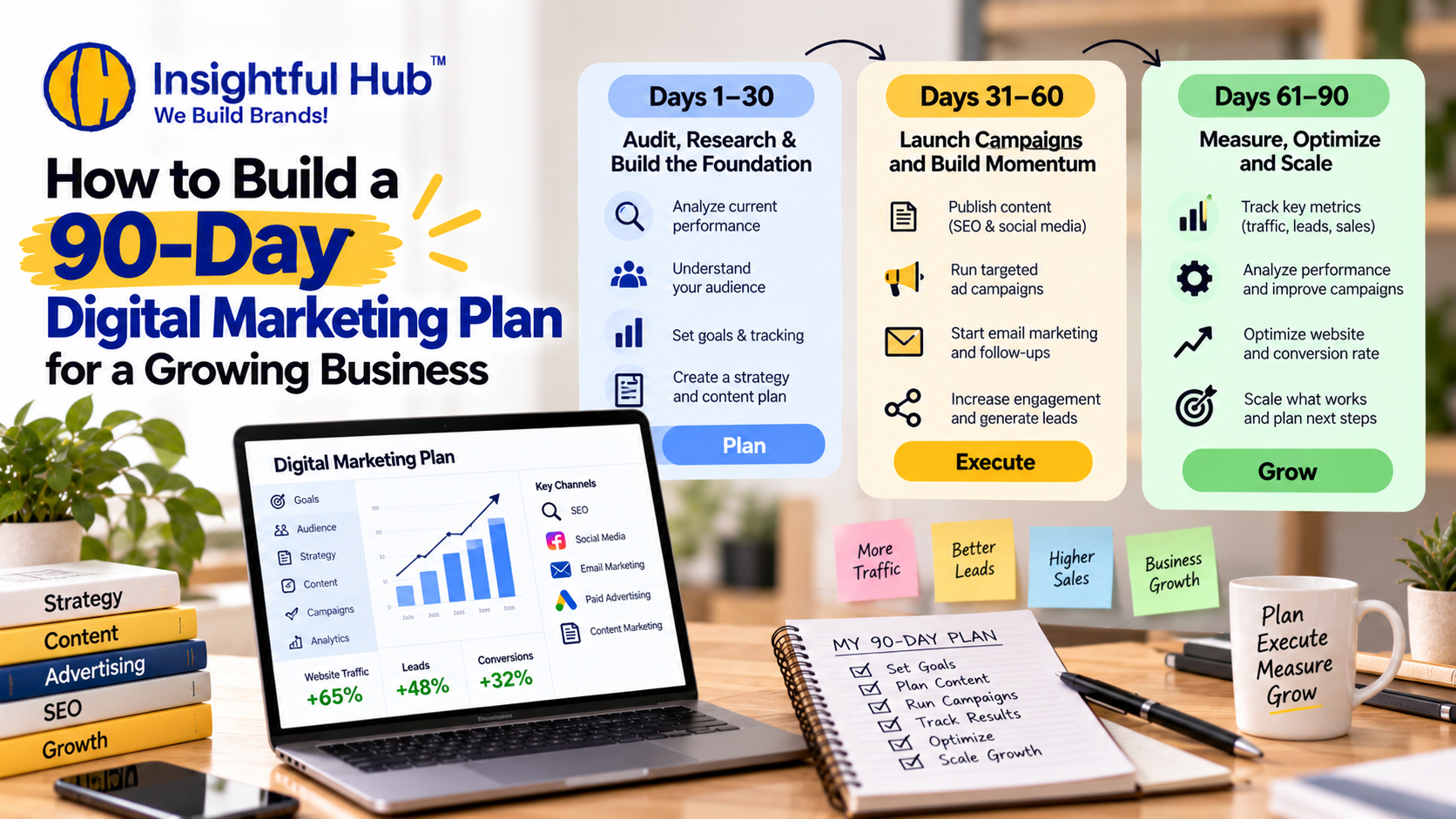
How to Build a 90-Day Digital Marketing Plan for a Growing Business
Growing a business requires more than posting on social media or running advertisements occasionally. You need a clear digital marketing strategy that connects your business goals with the right audience, marketing channels, and measurable results.
A 90-day digital marketing plan helps you organize your marketing activities into manageable stages, identify what works, and improve your strategy using real performance data.
Whether you run a startup, a small business, or a growing D2C brand, this guide will help you create a practical 90-day plan for sustainable growth.
Step 1: Define Your Business Goals
Decide what you want to achieve
Before choosing marketing channels, identify the results your business needs over the next three months.
Examples of marketing goals
Generate more qualified leads.
Increase website traffic from relevant audiences.
Improve online sales and conversion rates.
Build brand awareness in your target market.
Increase repeat purchases from existing customers.
Make your goals measurable. Instead of saying “get more leads,” set a specific target based on your current performance and available budget.
Step 2: Understand Your Target Audience
Identify the customers you want to reach
Your marketing becomes more effective when you understand your customers’ needs, preferences, challenges, and purchasing behaviour.
What should you research?
Study customer feedback, competitor messaging, website analytics, previous enquiries, and purchase patterns. Use these insights to understand what influences customers to choose your business.
This information helps you create relevant content, select suitable marketing channels, and communicate your value more clearly.
Step 3: Choose the Right Marketing Channels
Focus on channels that support your goals
You do not need to be active on every platform. Select channels based on your audience, resources, and business objectives.
Channels to consider
SEO: Attract relevant visitors through search engines.
Content marketing: Educate your audience through blogs, guides, and videos.
Social media: Build awareness and engage with potential customers.
Email marketing: Nurture leads and maintain customer relationships.
Paid advertising: Reach targeted audiences and test campaign performance.
For additional guidance, explore Insightful Hub’s performance marketing services.
Your 90-Day Digital Marketing Roadmap
Days 1–30: Audit, Research, and Build the Foundation
Focus: Prepare your marketing strategy
During the first month, understand your current performance and fix the most important gaps.
Audit your website, SEO, social media, and existing campaigns.
Define your audience and business goals.
Review competitors and identify opportunities.
Set up analytics and conversion tracking.
Create a content calendar and campaign plan.
Expected outcome: A clear strategy, reliable tracking, and a prioritized list of improvements.
Days 31–60: Launch Campaigns and Build Momentum
Focus: Execute your marketing activities
Use the second month to put your strategy into action and begin gathering performance data.
Publish SEO-focused blog content.
Maintain a consistent social media schedule.
Launch targeted advertising campaigns where appropriate.
Create lead magnets, landing pages, or enquiry forms.
Introduce email follow-ups for new leads.
Review campaign performance regularly.
Expected outcome: Active marketing campaigns, improved audience engagement, and initial performance insights.
Days 61–90: Measure, Optimize, and Scale
Focus: Improve results using data
During the final month, identify which activities contribute most effectively to your business goals.
Review traffic, leads, sales, and conversion rates.
Identify underperforming campaigns.
Test different advertisements, headlines, and calls to action.
Improve website pages with high visitor drop-off.
Allocate more resources to effective channels.
Prepare priorities for the next 90 days.
Expected outcome: A more informed marketing strategy and a clear plan for the next growth stage.
Step 4: Set a Realistic Marketing Budget
Allocate resources based on business priorities
Your budget should reflect your goals, competition, available resources, and expected returns. Consider expenses such as advertising, content production, website improvements, software, and professional services.
Start with a manageable approach
If your budget is limited, prioritize essential tracking, website improvements, consistent content, and one or two relevant acquisition channels. Expand spending when your data supports the decision.
Step 5: Track the Right Marketing Metrics
Measure outcomes instead of activity alone
Posting frequently or generating clicks does not necessarily mean your marketing is working.
Important metrics to monitor
Website traffic and relevant search visibility
Qualified leads and cost per lead
Conversion rate
Customer acquisition cost
Advertising return on ad spend, where applicable
Revenue and repeat purchases
Use tools such as Google Analytics and Looker Studio to monitor performance. Choose metrics that directly relate to your business goals.
Common Mistakes to Avoid
Trying to Do Everything at Once
Why it matters
Managing too many channels can spread your budget and team too thin.
What to do: Start with the channels most likely to reach your target audience.
Ignoring Website Conversion Problems
Why it matters
Marketing campaigns may attract visitors, but a confusing or slow website can prevent them from becoming customers.
What to do: Review your website experience, messaging, mobile usability, and calls to action. Explore Insightful Hub’s web design and development services.
Expecting Immediate Results From Every Channel
Why it matters
Different marketing activities take different amounts of time to produce meaningful results.
What to do: Set realistic expectations, monitor early indicators, and adjust your strategy based on evidence rather than making premature decisions.
How Insightful Hub Can Help
At Insightful Hub, we help businesses connect branding, website experiences, content, and performance marketing to support their digital growth goals.
Whether you need to improve your website, attract relevant audiences, or create a more measurable marketing strategy, a coordinated approach can help you make better use of your resources.
Contact Insightful Hub to discuss your business goals and explore the right next steps.
Final Thoughts
A successful 90-day digital marketing plan gives your business direction, structure, and a way to measure progress.
Use the first month to build a strong foundation, the second to execute campaigns, and the third to improve performance based on data. Review your results regularly and adapt the plan as your business grows.
The goal is not to do more marketing. It is to focus on the activities that create meaningful business results.