
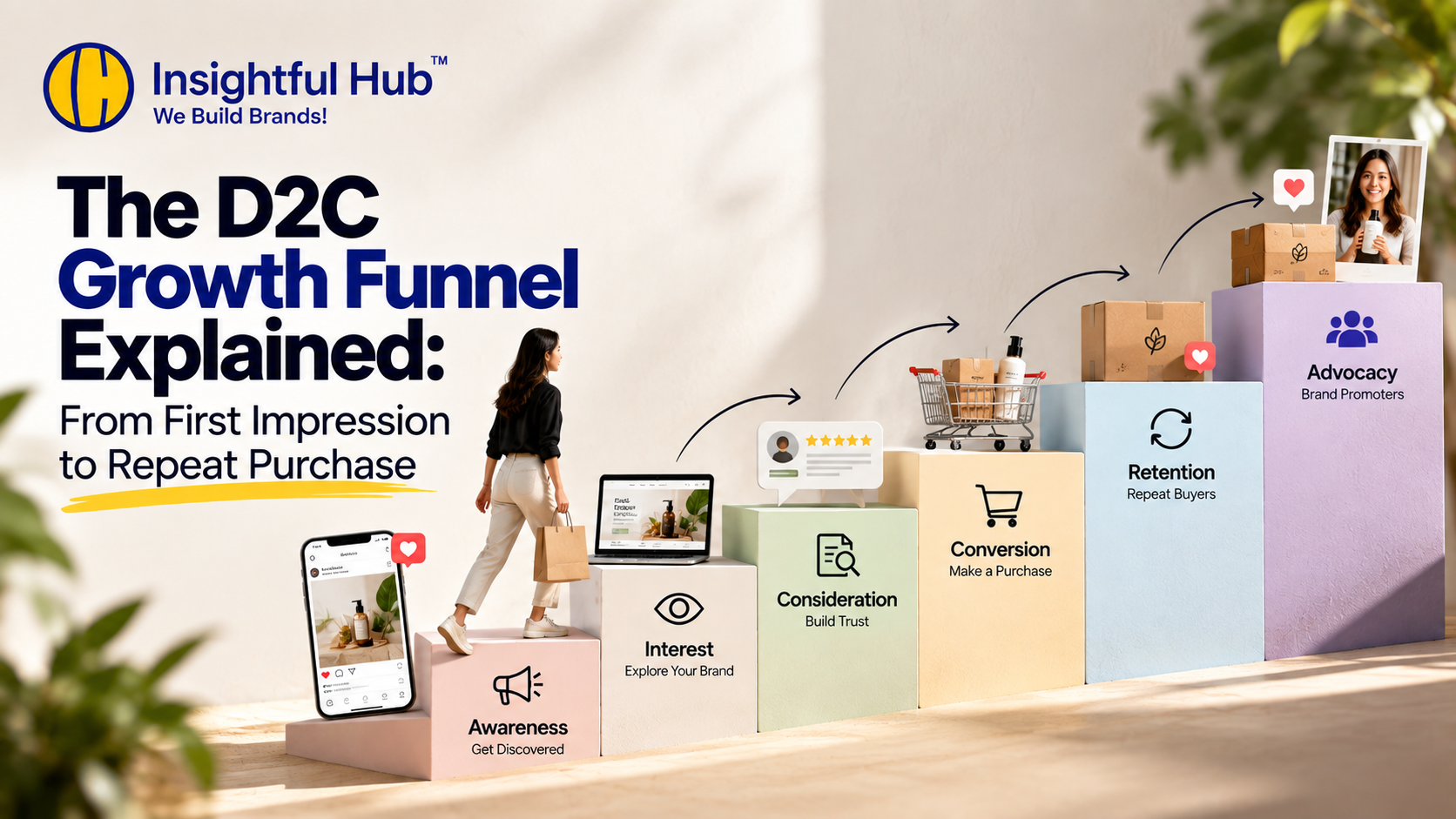
The D2C Growth Funnel Explained: From First Impression to Repeat Purchase
Building a successful D2C brand is not just about getting customers to visit your website. The real challenge is moving them through every stage of the customer journey — from discovering your brand for the first time to becoming a loyal repeat customer.
A well-planned D2C growth funnel helps brands understand what customers need at each stage and create strategies that improve conversions, customer experience, and long-term growth.
In 2026, successful D2C brands are focusing on more than acquisition. They are combining branding, content, performance marketing, ecommerce optimization, and customer retention to build sustainable growth.
What Is a D2C Growth Funnel?
A D2C growth funnel represents the different stages a customer goes through before and after purchasing from a brand.
The journey typically looks like:
Awareness → Interest → Consideration → Conversion → Retention → Advocacy
Each stage requires a different strategy.
1. Awareness: Make Your Brand Discoverable
The first stage is getting potential customers to discover your brand.
Customers may find your D2C brand through:
- Instagram and Facebook
- Google Search
- Influencer marketing
- YouTube
- SEO
- Paid advertising
- Word-of-mouth
At this stage, your goal isn’t necessarily to make a sale immediately.
It’s to capture attention and create brand awareness.
Strong visuals, memorable branding, useful content, and clear messaging can help your brand stand out.
Keyword Focus:
- D2C marketing strategy
- D2C brand awareness
- D2C marketing agency
- ecommerce marketing strategy
2. Interest: Give Customers a Reason to Explore
Once people discover your brand, you need to give them a reason to learn more.
Your website, social media profiles, videos, and content should communicate:
- What your brand offers
- Who your products are for
- What makes your brand different
- Why customers should consider your products
3. Consideration: Build Trust Before the Purchase
Customers rarely purchase simply because they saw a product once.
They may compare alternatives, read reviews, check social media, or search for more information.
This is where trust becomes important.
D2C brands can strengthen consideration with:
- Customer reviews
- Testimonials
- User-generated content
- Product demonstrations
- FAQs
- Detailed product information
- Influencer content
- Transparent policies
The more confidently customers understand your product, the easier it becomes for them to make a purchase decision.
Keyword Focus:
- D2C conversion optimization
- ecommerce conversion rate optimization
- D2C customer journey
- ecommerce CRO
4. Conversion: Make Buying Easy
At the conversion stage, your goal is simple:
Turn interest into action.
Your website should make purchasing as easy as possible.
Focus on:
- Clear product benefits
- Strong product images
- Simple navigation
- Visible CTAs
- Multiple payment options
- Transparent shipping information
- Easy checkout
- Mobile optimization
Even small improvements to your product page or checkout process can remove unnecessary friction from the customer journey.
5. Retention: Turn Customers Into Repeat Buyers
The funnel doesn’t end after the first purchase.
One of the biggest opportunities for D2C brands is encouraging satisfied customers to purchase again.
Retention strategies can include:
- Email marketing
- WhatsApp marketing
- Loyalty programs
- Personalized recommendations
- Replenishment reminders
- Subscription offers
- Exclusive customer offers
- Post-purchase content
The goal is to move customers from:
First Purchase → Repeat Purchase → Loyal Customer
6. Advocacy: Turn Customers Into Brand Promoters
Happy customers can become one of your strongest marketing channels.
Encourage customers to:
- Leave reviews
- Share products on social media
- Create UGC
- Refer friends
- Participate in loyalty programs
- Share their experiences
Authentic customer experiences can help introduce your brand to new audiences.
How D2C Brands Can Optimize Their Growth Funnel
A strong funnel requires continuous improvement.
Brands should regularly monitor:
- Website traffic
- Engagement
- Product views
- Add-to-cart rate
- Checkout rate
- Conversion rate
- Average order value
- Repeat purchase rate
- Customer lifetime value
Instead of focusing only on getting more traffic, identify where customers are dropping off and improve that stage.
The Future of D2C Growth
The D2C landscape is becoming increasingly competitive.
Brands will need to combine:
- Personalized customer experiences
- AI-powered recommendations
- Creator and UGC marketing
- First-party customer data
- Performance marketing
- Conversational commerce
- Strong retention strategies
- Data-driven conversion optimization
The brands that understand the entire customer journey can create stronger relationships instead of focusing only on one-time transactions.
Final Thoughts
The D2C growth funnel is more than a marketing framework.
It’s a way to understand how customers discover your brand, evaluate your products, make a purchase, and eventually become loyal customers.
A successful D2C journey looks like:
Discover → Explore → Trust → Purchase → Return → Recommend
When every stage works together, your brand can turn individual transactions into long-term customer relationships and sustainable growth.